

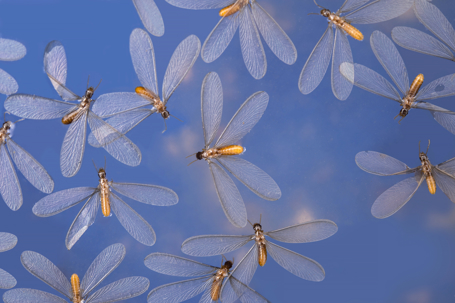
Many homeowners in Northern Ohio and Southeast Michigan get a surprise in the spring when they find small, winged insects inside their homes. These are often called swarmers, and they usually appear in large groups near windows or doors after a warm rain. It is very easy to mistake these for flying ants, but knowing the difference is important for your home's safety. If you see these insects, it is usually a sign that a termite colony is nearby and looking for a new place to grow.
What Exactly Are Termite Swarmers?
A termite swarmer is a young, winged adult termite whose primary job is to leave its original colony to start a new one. These insects are the reproductive members of the colony, and they typically emerge in large numbers on warm, sunny days following a spring rain. In our region, they are most active between March and May, looking for a mate and a suitable place to settle down. Once they land and find a partner, they shed their wings and begin the process of building a nest, often underground.
While the swarmers themselves do not eat your wood or cause structural damage, their presence is a major red flag. If you see them emerging from a crack in the wall or find a pile of discarded wings on your windowsill, it usually means there is a mature, active colony nearby or even under your foundation. Because termites live in the soil and travel through hidden mud tubes, these winged adults are often the only visible sign that a hidden problem exists.
To help you identify these insects more clearly, look for these specific physical traits:
- Body Shape: Termites have a thick, straight waist, unlike ants, which have a very narrow, pinched, wasp-like middle.
- Antennae: Their antennae are straight and look like they are made of tiny beads, while ants' antennae are bent or elbowed.
- Wing Length: Termites have four wings that are all the exact same size and length, usually much longer than their bodies.
- Wing Appearance: The wings are translucent or milky white and break off very easily at the slightest touch.
Termite vs. Flying Ant: How to Tell the Difference
It is very common for homeowners to mistake flying ants for termites because they both swarm around the same time of year. While ants can be a nuisance, they don't pose the same structural threat to your home's framing that termites do. Taking a moment to look closely at a specimen—perhaps with a magnifying glass—can provide a lot of clarity. Ants are generally more robust and come in various colors, while termite swarmers are typically dark brown or black with their distinctly uniform wings.
Beyond just their looks, the behavior of these insects can give you a clue about what you are dealing with. Ants are often seen foraging for food, crawling in lines toward a kitchen spill or a crumb. Termites, on the other hand, are focused entirely on finding a mate during their swarm and will often die quickly once they are inside a dry home. If you find a pile of wings but no insects, you are almost certainly looking at the aftermath of a termite swarm rather than ant activity.
Check these key behavioral differences to distinguish between the two:
- Light Attraction: Both insects are attracted to light, but termite swarmers are frequently found huddled on windowsills or around light fixtures.
- Wing Shedding: If the wings are still attached but the insect has a pinched waist, it is likely an ant; termites shed their wings almost immediately after landing.
- Presence of Mud: Look for small tubes made of dirt on your foundation; these are built by termites, not ants, to stay moist while they travel.
Why Swarming Happens Inside the Home
Seeing a swarm outside near a decaying stump is a natural part of the ecosystem, but seeing them inside your living room is a different story. If swarmers are found indoors, they have likely emerged from an infestation already established within the structure of the house. They follow light, which is why they end up trapped near glass windows, trying to get back outside to the soil. Unfortunately, once they are inside, they rarely survive long enough to start a new colony because they require constant moisture from the earth to live.
However, the death of the swarmers doesn't mean the problem is gone. The worker termites, which stay hidden in the wood and soil, continue to eat 24 hours a day, seven days a week. Finding swarmers inside is essentially a warning light from the colony below, telling you that it is time to have a professional look at the hidden areas of your home. It is important to stay calm and collect a few samples in a jar so that an expert can provide an accurate identification and assess the level of activity.
Proactive Steps for Homeowners
While you wait for a professional evaluation, there are several things you can do to make your property less inviting to these wood-destroying insects. Termites are primarily looking for two things: moisture and food. By managing the environment around your foundation, you can reduce the chances of a colony deciding to take up residence under your porch or crawlspace. Simple maintenance tasks can go a long way in creating a buffer zone that protects your biggest investment.
Consider these practical tips to help keep your home's exterior less attractive to pests:
- Divert Water: Ensure gutters and downspouts carry water at least three feet away from the house to keep the soil near the foundation dry.
- Clear Debris: Remove old stumps, buried scrap wood, and piles of firewood that are leaning against the side of your home.
- Manage Mulch: Keep wood mulch at least a few inches away from the siding and foundation, as it holds moisture and provides a direct path for termites.
- Seal Entry Points: Use caulk to fill any small cracks in the foundation or gaps around utility pipes that enter the house.
Knowing When to Call the Professionals
Identifying an insect is only the first step, but dealing with an established colony requires specialized tools and knowledge. Termites are notoriously difficult to track because they live in total darkness and can travel through tiny gaps in concrete. Attempting to solve the problem with over-the-counter sprays often fails because those products only kill the bugs you see, leaving the main colony underground completely untouched. A professional approach ensures that the root of the problem is addressed safely and effectively.
Working with a local team that understands the specific soil conditions and climate of Northern Ohio and Southeast Michigan is vital. Since the damage caused by termites can be silent and hidden behind drywall or under floorboards, having a trained eye look for subtle signs—like hollow-sounding wood or bubbling paint—provides the peace of mind that a simple visual check cannot. Taking action early is always more cost-effective than waiting until structural repairs are needed.
Expert Solutions for Your Home's Protection
Protecting the integrity of your home requires a thorough understanding of how these pests interact with your specific environment. It is about more than just eliminating a few visible bugs; it is about creating a comprehensive barrier that keeps the structure safe from future intrusion. By focusing on both immediate removal and long-term prevention, you can ensure your home remains a safe place for your family without the worry of hidden damage.
When it comes to wood-destroying insects, accuracy in identification is the key to choosing the right solution. Our specialized termite treatments at Frame's Pest Control, Inc. are designed to target the heart of the colony, using advanced liquid barriers or baiting systems that provide ongoing defense. Whether you need a detailed inspection for a new home purchase or you are worried about swarmers in your basement, we provide the technical expertise and general pest control services needed to keep your property secure.
If you’ve spotted wings on your windowsills or insects in your walls, don’t wait for the damage to grow. Contact the local experts at Frame's Pest Control, Inc. today at (877) 803-5966 or reach out through our online contact form to schedule your professional inspection!