
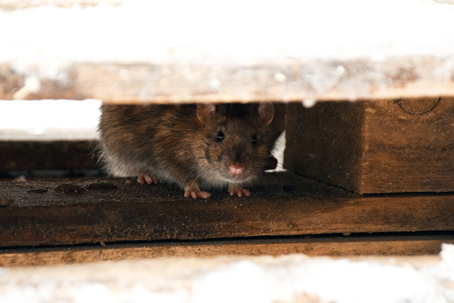
Few things are more frustrating than thinking you've solved a mouse problem, only to hear scratching in the walls a few nights later.
You set traps, catch a mouse or two, clean up the droppings, and assume the problem is over. Then fresh signs appear in the pantry, behind the stove, or under the sink, making it feel like the mice simply keep coming back.
In reality, the traps are probably working—they're just not addressing the whole problem.
Across Northern Ohio and Southeastern Michigan, mouse activity ramps up as temperatures cool and outdoor food sources become scarce. Homes provide warmth, shelter, and easy access to food, making them ideal places for rodents to spend the colder months. Unless the reasons they're getting inside are addressed, removing a few mice rarely stops the cycle.
Traps Remove Mice—Not the Reason They're There
A mousetrap catches only the animal that happens to trigger it.
It doesn't eliminate the nest hidden inside a wall, close the gap where rodents are entering, or stop new mice from following the same route indoors.
By the time homeowners notice obvious signs like droppings or nighttime noises, mice have often been active for weeks.
That's because they're naturally cautious. They prefer staying inside wall voids, attics, crawl spaces, or behind appliances where people rarely look.
Seeing one mouse in the open doesn't necessarily mean there's only one.
It often means the infestation has grown enough that some mice are venturing farther in search of food.
Why Mouse Populations Grow Faster Than Most People Expect
One reason trapping alone feels ineffective is how quickly mice reproduce.
According to the U.S. Environmental Protection Agency (EPA), a single female house mouse can produce multiple litters each year, with young reaching breeding age in just a few weeks under favorable indoor conditions.
A heated home provides exactly the kind of stable environment they need.
That means while traps may remove several mice, others may already be nesting elsewhere inside the structure.
Instead of shrinking, the population can remain steady—or even continue growing.
Professional rodent control focuses on interrupting that cycle rather than simply removing individual rodents as they appear.
Mice Leave Behind Invisible Trails
Rodents don't wander aimlessly through a home.
They rely on scent to navigate.
As mice travel, they leave pheromone trails in their urine that help other mice locate:
- Food sources
- Water
- Safe travel routes
- Nesting areas
Those scent trails remain long after individual mice have been trapped.
To homeowners, it looks like the same mice keep returning.
Often, they're entirely new mice following the exact same pathways.
Regular household cleaners may remove visible dirt without completely breaking down those scent markers.
Enzyme-based cleaning products are generally more effective because they're designed to break down organic residues that standard cleaners can leave behind.
Cleaning alone won't solve an infestation, but removing those scent trails can make your home less inviting to future rodents.
Small Openings Create a Constant Supply of New Mice
Many homeowners are surprised to learn how little space a mouse needs to enter a house.
A gap roughly the size of a dime is often enough.
Common entry points include:
- Openings around plumbing pipes
- Utility and electrical penetrations
- Foundation cracks
- Garage door corners
- Damaged weatherstripping
- Dryer vent openings
- Gaps beneath siding
If these openings remain, every mouse caught inside can eventually be replaced by another from outdoors.
This becomes especially noticeable during fall in Northern Ohio and Southeastern Michigan, when harvested fields and colder temperatures push rodents toward warmer buildings.
Even well-maintained homes aren't immune.
Over time, normal settling, seasonal expansion, and everyday wear can create tiny gaps that are easy for mice to exploit.
Not Every DIY Repair Keeps Mice Out
Sealing holes is one of the most important parts of rodent prevention—but the material matters.
Many quick fixes simply don't last.
Mice can chew through:
- Spray foam
- Rubber seals
- Plastic covers
- Standard caulk
For long-term rodent exclusion, professionals typically recommend more durable materials such as:
- Copper mesh
- Galvanized hardware cloth
- Metal flashing
These materials resist chewing and provide a much more reliable barrier around common entry points.
Simply covering a hole isn't always enough if the material itself becomes another thing rodents can gnaw through.
Getting More From Your Traps
Even a quality trap won't do much if it's in the wrong place.
Mice naturally travel along walls and hidden edges because those routes make them feel protected. A trap placed in the middle of an open floor may never be crossed, even if mice are active nearby.
For better results, place traps:
- Along baseboards
- Behind refrigerators and stoves
- Under sinks
- Near pantry shelves
- Beside known droppings or gnaw marks
Position snap traps perpendicular to the wall, with the trigger end facing the baseboard. This increases the chance that a mouse following its normal route will activate the trap.
Another common mistake is removing traps too soon. If activity seems to stop after a few days, it's tempting to pack everything away. In many cases, however, mice are simply avoiding the area temporarily, or new rodents haven't entered yet.
Leaving traps in place for several weeks after the last catch can help intercept lingering mice while you're working to seal entry points.
Food Sources Can Make Traps Less Effective
Think about the choices a mouse has inside your home.
If there's pet food left out overnight, crumbs beneath appliances, bird seed in the garage, or unsealed pantry items, the bait on a trap becomes just one option among many.
Reducing easy food access makes traps far more appealing.
Simple habits that help include:
- Storing dry foods in sealed containers
- Cleaning under appliances regularly
- Keeping pet food off the floor overnight
- Using trash cans with tight-fitting lids
- Sweeping up crumbs and spilled seed
Good sanitation won't eliminate an infestation on its own, but it can improve the effectiveness of every other control method.
Signs the Problem Is Bigger Than a Few Mice
Some rodent problems can be managed with careful trapping and home maintenance.
Others point to an active infestation that's continuing to grow behind the scenes.
Watch for signs like:
- Fresh droppings appearing after you've already cleaned
- Scratching sounds inside walls or ceilings
- Mouse activity is spreading into multiple rooms
- Gnaw marks on wiring or stored belongings
- Traps catching mice week after week with no slowdown
When these signs continue, it's often an indication that mice are nesting in areas that aren't easily accessible or that new rodents are entering faster than they're being removed.
At that point, focusing only on traps can become an endless cycle.
Breaking the Cycle Takes More Than One Solution
Long-term rodent control isn't about finding a stronger trap.
It's about removing the conditions that allow mice to keep returning.
That usually means combining several strategies:
- Finding and sealing entry points
- Correcting sanitation issues
- Placing traps where mice actually travel
- Monitoring for new activity
- Reducing outdoor rodent pressure around the home when needed
This integrated approach is recommended by pest management professionals because it addresses both the rodents you see and the ones you don't.
Without exclusion work, every successful trap may simply create room for another mouse to move in.
When Professional Rodent Control Makes Sense
If you've been resetting traps for weeks and continue finding fresh signs of activity, the issue likely extends beyond what trapping alone can solve.
A professional inspection can identify hidden nesting areas, locate structural entry points, and develop a treatment plan tailored to how mice are actually using your home.
For recurring infestations, the goal isn't simply catching more mice—it's preventing the next wave from getting inside in the first place.
If mice keep returning despite your best efforts, Frame's Pest Control, Inc. provides professional rodent control and exclusion services designed to stop the cycle. Call (877) 803-5966 to schedule an inspection, or book your rodent inspection here today to get started.